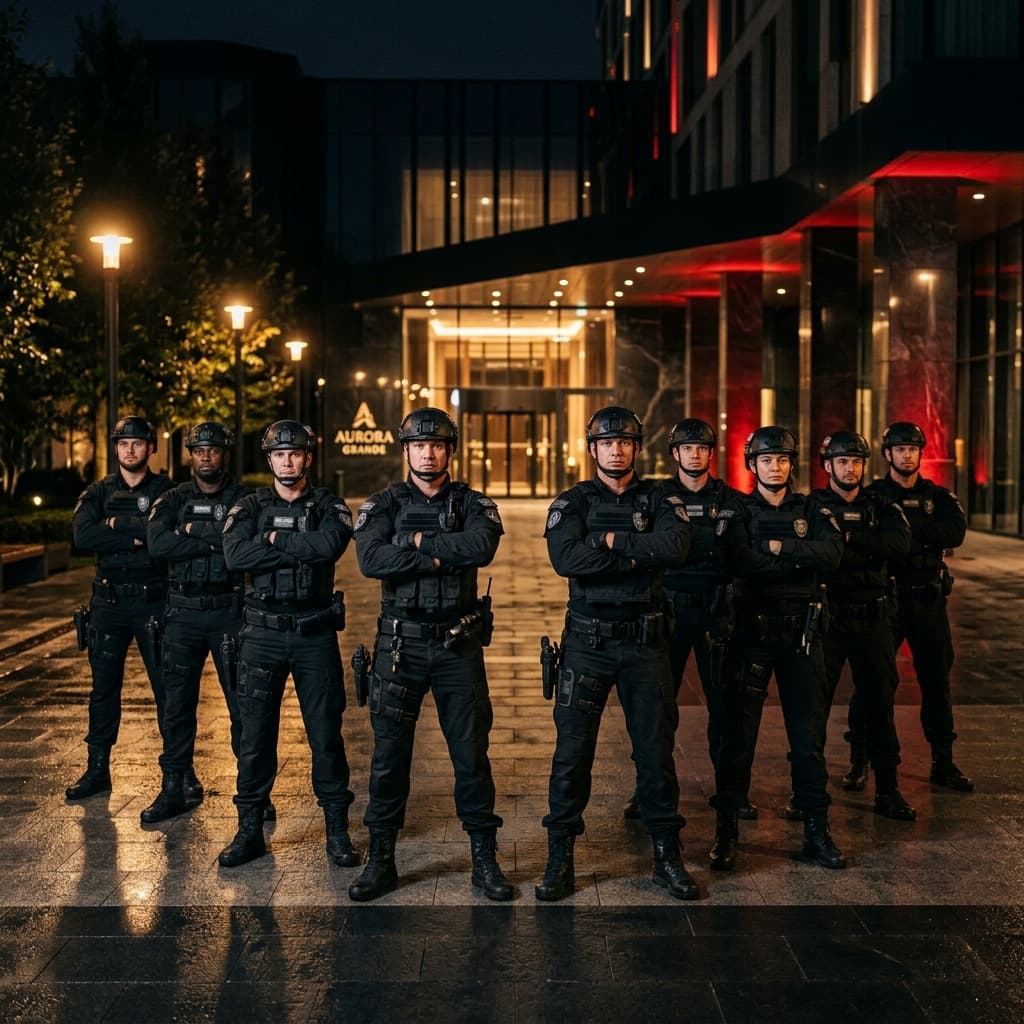
Security Guard Duties and Shift Patterns Explained
Reviewed by the Operations Team · Last updated Oct 4, 2026
The Short Answer
A guard's duty breaks into five blocks: entry control, visitor and vehicle logging, patrol rounds, register maintenance and emergency first response. Shifts run 8 or 12 hours, with 24/7 posts needing three 8-hour rotations plus relievers. The pattern matters less than the brief — a guard with a written post order outperforms a longer shift with vague instructions every time.
The Five Duty Blocks
Entry control: stopping, questioning and permitting movement at gates. Logging: visitor, vehicle, material and key registers kept contemporaneously, not filled in later. Patrols: timed rounds of checkpoints — basements, terraces, parking, perimeters. Watch: shutter checks at close, lighting and lock observation, emergency-lane awareness at hospitals. First response: raising the alarm, guiding evacuation, calling emergency services and protecting the scene. Every post order should name which blocks apply and when. Residential briefs are detailed under /services/home-security.
8-Hour vs 12-Hour Shifts
Eight-hour shifts keep guards sharper, need three rotations for 24/7 cover and cost more in headcount. Twelve-hour shifts need only two rotations, suit day-only commercial cover, but demand strict alertness management — long night twelves are where sleeping-on-duty complaints come from. The honest rule: use twelves for day commercial posts, eights for nights and high-risk gates. Whatever the pattern, weekly offs and relievers are mandatory, not optional.
Night Duty Is a Different Job
Night guards patrol more and interact less, which makes supervision harder and sleeping more likely. Counter it with timed checkpoint entries, supervisor night checks on rotation and a morning summary the client reads. Rear gates, terraces and basement ramps must be named patrol points — unnamed points get skipped. Commercial night discipline is covered under /services/business-security.
Shift Patterns Compared
Pattern | Rotations for 24/7 | Alertness | Best for 8-hour x 3 | Three shifts + relievers | Highest | Nights, hospitals, high-risk gates 12-hour x 2 | Two shifts + relievers | Moderate | Day commercial, shops, offices Event / function | Team per function window | Peak-load | Weddings, events, dispersal No single pattern fits all posts — mixed rosters (twelves by day, eights by night) are common on larger sites.
Registers: the Duty You Can Audit
If you manage guards, audit the registers weekly: visitor logs with in-out times, patrol logs with checkpoint times, material logs with quantities, incident notes with dates. Gaps, backfilled entries and identical handwriting across shifts are red flags. A supervisor who reads registers catches drift months before it becomes an incident.
The Post Order: Writing Duties Down
Every post needs a written post order: position, shift timings, the five duty blocks applicable, patrol points with round frequency, register formats, escalation contacts and the supervisor's visit schedule. The guard signs it, the client holds a copy, and replacements read it before their first shift. Undocumented duties decay within weeks — documented ones survive guard changes, which is exactly when most sites lose discipline. If your agency cannot produce a post order for your site, that tells you everything about their supervision.
Handover Between Shifts
Shift change is where information dies: pending visitors, a vehicle held for confirmation, a flickering basement light, an incident from the night. A proper handover runs five minutes at the post — outgoing guard briefs incoming on the logbook, both sign, and open items carry names and deadlines. Sites that skip handover rediscover the same problems every shift. Supervisors should witness handovers during audits; five observed minutes reveal more than fifty signed pages.
Training New Guards Onto a Post
A new guard should shadow the outgoing guard for at least two full shifts: one to observe the flow, one to run the post under watch. Cover the post order line by line, walk every patrol point physically, practice the register entries, and rehearse the escalation call — who to phone, what to say, what to log. Supervisors sign off the induction in the site register. Guards thrown onto posts cold make their first impression on your visitors while still lost; two shadow shifts cost little and prevent months of weak performance.
Uniform, ID and Turnout Standards
A guard's uniform is working equipment: clean and complete every shift, ID card displayed, whistle and torch for night posts, rain gear in monsoon. Supervisors should fail turnout inspections, not wave them through — sites judge the agency by the guard's appearance before judging performance. Include turnout in the post order so standards survive guard rotations.
Key Takeaways
One: five duty blocks — entry, logging, patrols, watch, first response. Two: twelves for day posts, eights for nights. Three: name every patrol point and require timed entries. Four: relievers and weekly offs are mandatory in every pattern. Five: audit registers weekly; they show drift before incidents do.
This briefing is brought to you by Defensary Alpha Security Services — Lucknow's premier security agency.

Need Expert Security Advice?
Contact Defensary Alpha for a free consultation and security assessment tailored to your needs.
Schedule Consultation